
Govt to bridge $600m oil palm supply deficit
The Federal Government has renewed its push to revitalise Nigeria’s oil palm industry, aiming to close a supply gap that costs the country up to $600 million annually in imports.
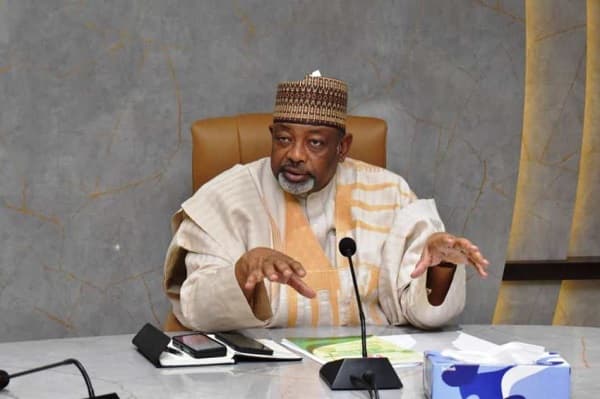
The Federal Government has renewed its push to revitalise Nigeria’s oil palm industry, aiming to close a supply gap that costs the country up to $600 million annually in imports.
Speaking at a national stakeholders’ meeting on the joint development of Nigeria’s palm oil production capacity, the Minister of Agriculture and Food Security, Abubakar Kyari, said Nigeria must urgently scale up production to reclaim its lost position in the global market.
Kyari, who was represented by the Senior Technical Assistant, Engr Ibrahim Alkali noted that Nigeria, which once accounted for more than 40 percent of global palm oil supply in the 1960s, now produces about 1.4 million metric tonnes annually, far below domestic demand estimated at over 2.5 million metric tonnes.
“The result is a deficit of more than one million metric tonnes every year, compelling us to spend between $500 million and $600 million annually on imports.
“We are exporting opportunities and importing what we have the capacity to produce”, he said.
The minister said the country has over three million hectares of land suitable for oil palm cultivation, much of which remains underutilised, while existing plantations suffer from low productivity due to ageing trees and limited access to improved inputs.
He stressed that rising global demand, valued at over $70 billion annually, presents Nigeria with an opportunity to reposition itself across the palm oil value chain, spanning food processing, cosmetics, pharmaceuticals and biofuels.
Kyari said the government, under President Bola Ahmed Tinubu, has prioritised agriculture as part of its economic diversification agenda, with efforts already underway to implement the National Oil Palm Development Strategy.
According to him, the strategy is designed to expand production, improve yields, strengthen processing capacity and integrate smallholder farmers into structured value chains through collaboration among government, private sector players and development partners.
He highlighted a proposal by Mass Industrial Development and Logistics Limited to establish seven integrated oil palm estates, each spanning 10,000 hectares across participating states.
The estates, he said, would function as complete economic ecosystems, combining cultivation with processing, logistics and community infrastructure, including housing, schools and healthcare facilities to support over 2,000 families per location.
Kyari added that the project’s second phase would focus on downstream processing and manufacturing of palm-based products, enabling Nigeria to capture more value across the production chain.
He described the initiative as a private sector-driven investment model with projected internal rates of return between 18 and 25 percent and a payback period of five to seven years.
If implemented at scale, the minister said the initiative could generate over 100,000 direct and indirect jobs, boost rural economies, enhance food security and save up to $500 million annually through import substitution.
Kyari also called on state governments to play a critical role by providing access to land, enabling policies and infrastructure, while urging investors and development partners to seize the opportunity.
“The demand exists, the policy direction is clear, and the investment case is sound,” he said. What is required now is commitment.”
Read Also: FULL LIST: 10 new BVN rules Nigerians must know before May 1
He emphasised that Nigeria has the land, climate, market and human resources needed to lead again in palm oil production, urging stakeholders to move from planning to implementation.
In his remarks the Permanent Secretary of the Federal Ministry of Agriculture and Food Security, Marcus Ogunbiyi, called for stronger collaboration among stakeholders to drive the joint development of Nigeria’s palm oil production capacity, as part of efforts to reposition the sector for sustainable growth and global competitiveness.
Ogunbiyi, who was represented by the Director, Farm Input Support Services, Engr Abbba Waziri, said the initiative reflects a shared commitment to revitalising the country’s oil palm industry.
He said the project followed the approval of the Minister of Agriculture and Food Security, Abubakar Kyari, for a proposal by Mass Industrial Development and Logistics Limited to undertake a joint development of Nigeria’s oil palm production capacity.
He explained that the initiative has been adopted as a national private sector-led programme, with the ministry providing institutional, policy and regulatory support.
The permanent secretary also disclosed that the ministry recently validated a draft National Oil Palm Development Strategy, developed through extensive technical engagements and consultations aimed at harmonising stakeholders’ inputs.