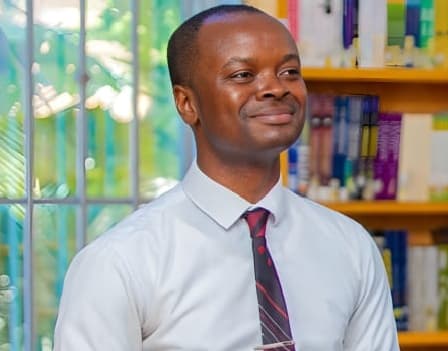
Tunji Disu: Burden of a good cop
My dear country Nigeria faces evolving security threats: banditry, cybercrime, urban kidnapping, and community conflicts driven by economic distress. These are not challenges that require a strong police chief. They
My dear country Nigeria faces evolving security threats: banditry, cybercrime, urban kidnapping, and community conflicts driven by economic distress. These are not challenges that require a strong police chief. They require a trusted one.
And, in recent years, Tunji Disu has come off almost all his assignments in sparkling hue and trust has replaced his middle name. He seems to have done this by killing two birds with one stone. There are officers who spend careers chasing promotion. There are others who spend careers chasing criminals. Disu, by many accounts, tried to do both without losing the third pursuit that matters most: relevance.
Lagosians will always remember his time as Rapid Response Squad (RRS) commander.
I lived in Lagos during this era and I dare say Disu’s hands were all over the security achievements of the Akinwunmi Ambode administration. After Lagos, assignments had taken him to Rivers and Abuja and his image as a policeman with a difference didn’t get dented.
If Disu’s career were a novel, I believe the Lagos Rapid Response Squad would be its most memorable chapter.
Between 2015 and 2021, he led the squad at a time when Lagos was battling armed robbery, traffic-related crime, and the psychological insecurity that accompanies megacity living. Under his leadership, the RRS adopted crime mapping, hotspot policing, and visible patrol deployment — strategies that improved response time and crime deterrence.
But what truly defined his tenure was not strategy. It was tone.
Advertisement
300x250
Disu famously referred to his officers as “The Good Guys,” an attempt to reshape internal culture and external perception. To some, it sounded like public relations theatre. To others, it was a necessary psychological reset in a force widely viewed with suspicion.
Read Also: Unity breeds prosperity, says First Lady in Warri
Stories emerged: officers helping stranded motorists, assisting accident victims, even transporting a woman in labour during the COVID-19 lockdown, gestures that placed him in the complicated space between institutional loyalty and humanitarian instinct. In Nigeria, such positioning is risky. Too humane, and you risk institutional suspicion. Too forceful, and you risk public condemnation.
These were small acts, but in a country where policing often evokes fear, small acts become loud statements.
After Lagos came intelligence work. Disu headed the Intelligence Response Team, stepping into a role previously dominated by strong personalities and public scrutiny. His tenure saw notable arrests, including fraud syndicates involved in sophisticated bank breaches.
His later deployments as Commissioner of Police in Rivers State and the Federal Capital Territory expanded his operational footprint, exposing him to politically sensitive security environments and high-stakes urban policing.
So, on February 24, when baton changed hands in the nation’s policing hierarchy and Disu took over from Kayode Egbetokun, I was happy for Disu. But I was also worried for him. I was worried about the possibility of this appointment marring his career. I was happy because I felt he has what it takes to make a difference.
Disu’s appointment by President Bola Ahmed Tinubu was not merely administrative. It was symbolic. Symbolism matters in Nigeria. Especially in policing, where public trust has often been as fragile as a promise made in election season. Disu’s elevation carries weight beyond rank. It is the story of a man stepping into an institution perpetually caught between fear and hope.
Advertisement
300x250
Disu belongs to that generation shaped by the optimism of post-civil war Nigeria and the harsh realities that followed. His academic path was unconventional for a police officer. He studied English Education at Lagos State University before pursuing postgraduate training in International Relations, Public Administration, and later Criminology and Legal Psychology. This academic breadth matters. It hints at a policeman who understands that crime is not merely an act of deviance but often a symptom of social dysfunction.
When Disu joined the Nigeria Police Force in 1992, the institution struggled with poor equipment, weak welfare, and an identity crisis. Over the decades, he served across Ogun, Ondo, Rivers, and Abuja, occupying roles that exposed him to the country’s diverse security challenges, from kidnapping corridors to urban crime networks.
Appointments in Nigeria often generate immediate narratives: the saviour narrative, the continuity narrative, or the scepticism narrative. Disu’s appointment sits awkwardly across all three.
To reform advocates, he is a hopeful figure with a record of innovation. To institutional loyalists, he represents continuity from within. To sceptics, he is simply another officer stepping into a system resistant to change. The truth likely lies somewhere in between.
Policing reform is rarely driven by individuals alone. It requires political will, funding, legislative support, and internal cultural shifts. The IGP can lead, but he cannot single-handedly transform. Still, individuals matter. Leadership tone shapes institutional behaviour, even if gradually.
Advertisement
300x250
There is a recurring narrative around Disu: that he represents the possibility of reform within the Nigeria Police Force. Profiles often describe him as disciplined, service-oriented, and committed to professionalism. Admirers see him as evidence that competence can survive within the system. But reform is a dangerous word in Nigerian public institutions. It raises expectations faster than institutions can respond. The real question is not whether Disu believes in reform. The question is whether reform believes in him. This makes more sense because the office of Inspector-General of Police is less a position than a battlefield. The occupant must confront violent crime, political pressure, public distrust, poor funding, internal discipline issues, and the ever-present debate over state policing.
Away from policing, Disu’s identity as a judoka offers a metaphor for his leadership journey. A third-dan black belt who has won national and international medals, he embodies discipline, balance, and resilience — qualities policing demands but rarely rewards.
Judo teaches leverage over brute strength, patience over impulse, and timing over aggression. If translated into policing philosophy, these lessons could shape a leadership approach grounded in restraint and calculated action.
My final take: Every IGP inherits problems. Some inherit crises. Disu appears to have inherited both. So, if Disu’s tenure is to be remembered, it will not be for the novelty of his appointment but for the choices he makes in moments of pressure. Will he prioritise intelligence-led policing in a digital age? Will he confront misconduct within the force with consistency? Will he strengthen community trust without weakening operational authority? Will he navigate political expectations without compromising professional independence?
These questions will define his legacy more than any promotion ceremony.
Lastly, Disu’s past balancing acts, which reflected the dilemma of reform-minded officers operating within rigid structures, provide hints at what his leadership philosophy might look like as IGP: pragmatic, optics-aware, and conscious of public perception. In him, we might see an IG who shows that leadership, after all, is sometimes the art of making kindness operational.