Nigeria’s Treasury Single Account: Key experts behind the scene
For years, Nigeria’s public finance architecture was fragmented. Ministries, Departments and Agencies (MDAs) operated thousands of accounts across commercial banks, creating a system that was opaque and difficult to monitor.
For years, Nigeria’s public finance architecture was fragmented. Ministries, Departments and Agencies (MDAs) operated thousands of accounts across commercial banks, creating a system that was opaque and difficult to monitor. Government often had to borrow while substantial sums of its own money lay idle in scattered accounts. It was within this context that the idea of a unified treasury system gained traction.
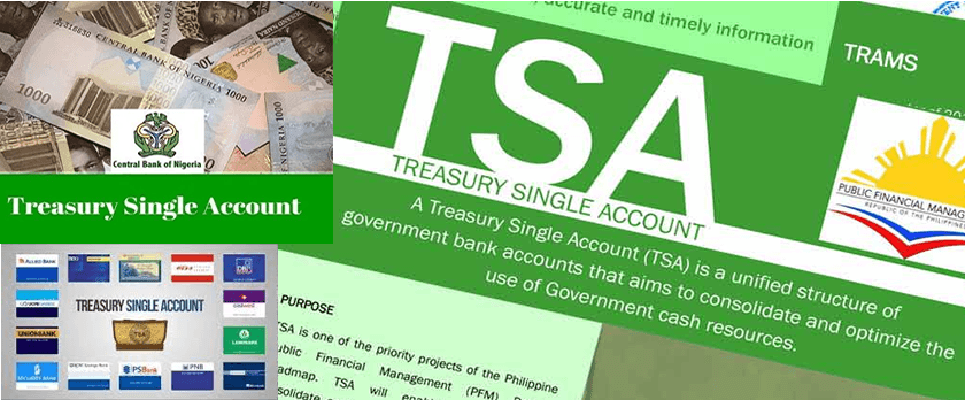
The Treasury Single Account (TSA) evolved through a mix of political will, institutional reform, and technological innovation. It is driven by several individuals whose contributions, though varied, converged on a single objective: to bring order, transparency, and accountability to government finances.
The administration of Goodluck Jonathan provided the initial push. Around 2011, the government began piloting the Treasury Single Account across a limited number of MDAs. The intention was clear: to consolidate government revenues into a single account domiciled at the Central Bank, thereby improving visibility and control.
However, like many structural reforms, the TSA faced resistance. Entrenched interests within the system, including segments of the banking sector that benefited from holding public funds, slowed the pace of implementation. As a result, while the policy framework was established during this period, full compliance remained elusive.
Advertisement
300x250
The turning point came under the administration of Muhammadu Buhari. Shortly after assuming office in 2015, Buhari mandated the full implementation of the TSA across all MDAs. This directive transformed what had been a gradual reform into an urgent national priority. Agencies were required to close their multiple accounts and remit all revenues into a single treasury account.
This decisive move was not merely administrative; it signalled a broader commitment to fiscal discipline and transparency. Within a relatively short period, vast sums of public money were consolidated, offering the government a clearer picture of its financial position than ever before.
At the heart of the TSA’s operation is the Central Bank of Nigeria, which serves as the custodian of the unified account. The Central Bank’s role extends beyond safekeeping funds. It provides the infrastructure that enables real-time monitoring of inflows and outflows, ensuring that government liquidity is efficiently managed. The institution also had to coordinate extensively with MDAs and financial institutions during the transition, helping to resolve operational challenges and maintain stability.
Yet, the TSA would likely not have achieved its scale and efficiency without a robust technological backbone. This is where John Obaro enters the story. As the founder of SystemSpecs, Obaro led the development of Remita, the electronic payment platform that powers TSA collections and remittances.
Remita became the digital engine of the TSA, enabling seamless aggregation of government revenues from multiple sources into the Central Bank account. It simplified payment processes for MDAs and ensured that transactions could be tracked and reconciled with a level of efficiency that manual systems could not achieve. In many ways, it bridged the gap between policy ambition and operational reality.
Advertisement
300x250
Behind the scenes, a cadre of senior civil servants played a crucial role in translating policy into practice. Among them was Danladi Kifasi, whose office issued directives that reinforced compliance across government institutions. These administrative instruments ensured that MDAs aligned their processes with TSA requirements, reducing ambiguity and enforcing uniformity.
The Office of the Accountant-General of the Federation also became a central coordinating hub, overseeing the migration of funds, reconciling accounts, and ensuring that the new system functioned as intended. This layer of bureaucratic leadership was essential, particularly in a reform of such scale, where success depended not just on policy but on meticulous execution.
The financial sector, initially wary of the TSA, gradually adjusted to the new reality. Commercial banks, which had long relied on public-sector deposits as a source of liquidity, had to recalibrate their strategies. While resistance marked the early stages, engagement with regulators and policymakers helped ease the transition, underscoring the importance of collaboration in large-scale reforms.
The impact of the TSA became increasingly evident. It improved the government’s ability to track revenues, reduced reliance on borrowing, and curtailed the leakages that had long plagued the system. Just as importantly, it introduced a culture of accountability, where public funds could be monitored with greater precision.
As the system matured, attention shifted from implementation to optimisation. This phase required a different kind of leadership—one focused on refining processes, improving user experience, and ensuring that the system remained responsive to stakeholders. It is within this context that Adenike Awolowo made her contribution.
Serving as Head of Client Services and Advisory Office and a Senior Management staff, Adenike Awolowo operates at the intersection of policy execution and stakeholder engagement. Her role involves overseeing TSA operations with a focus on accuracy in transfers and effective liquidity management. This responsibility is critical in sustaining confidence in the system, particularly as transaction volumes and complexity increased.
Beyond operational oversight, she works to improve how users interact with the TSA framework. By streamlining complaint-handling processes, she helps reduce the time it takes to resolve issues, enhancing the overall efficiency of the system. In a reform that affects hundreds of government agencies, such improvements in service delivery are essential.
Her responsibilities also extend to managing recapitalisation funds for financial institutions, ensuring compliance with investment guidelines. This aspect of her work highlights how the TSA, while primarily a revenue management tool, intersects with broader financial system considerations.