The trillion-naira scandal: How Anchor Borrowers Programme turned into monument of failed agricultural intervention
•Culprits at large as nation counts cost It began with a promise to make Nigeria feed itself. Today, it is a maze of missing billions and phantom farmers. More than
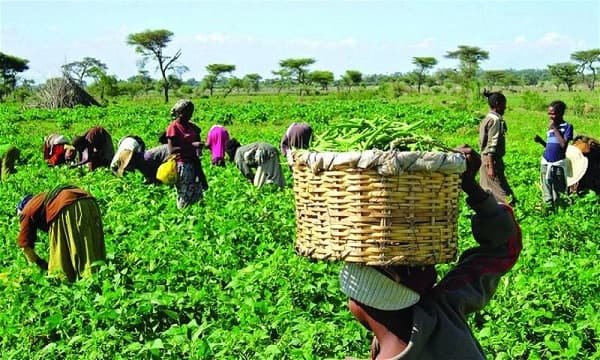
•Culprits at large as nation counts cost
It began with a promise to make Nigeria feed itself. Today, it is a maze of missing billions and phantom farmers. More than a decade after the N1.2 trillion Anchor Borrowers Programme (ABP) was launched, Nigerians are counting the cost, and the culprits are still at large. NICHOLAS KALU reports.
Preamble
Earlier this month, the House of Representatives Committee on Nutrition and Food Security opened yet another chapter in what has become a long-running agricultural scandal. The committee began probing insurance coverage for the N1.12 trillion Anchor Borrowers Programme (ABP), with the Nigerian Agricultural Insurance Corporation (NAIC) admitting it provided cover to only 207,514 farmers, representing a mere 12 per cent of the scheme's total value. Managing Director of NAIC, Dayo Babaronti, told lawmakers that his corporation covered only N109 billion of the programme, revealing that the Central Bank of Nigeria (CBN) had secretly contracted two other insurance firms, Veritas Kapital Insurance and Leadway Insurance, in violation of the original policy that designated NAIC as the sole insurer. Neither firm bothered to send representatives to the hearing.
This latest probe is merely the most recent attempt to unravel a programme that, from its inception in November 2015, promised to transform Nigeria's agricultural landscape but instead became a byword for mismanagement, corruption and squandered opportunity.
The grand vision that never was
When former late President Muhammadu Buhari formally launched the Anchor Borrowers Programme in November 2015, the initiative carried the weight of enormous expectations. Conceived during the preceding Goodluck Jonathan administration and domiciled in the CBN rather than the Ministry of Agriculture, the programme was designed to achieve four ambitious objectives: increase banks' financing to agriculture, reduce the national food import bill, create a new generation of innovative farmers, and deepen financial inclusion by moving smallholders from subsistence to commercial farming.
Under the scheme, loans were to flow through Participating Financial Institutions (PFIs) like Deposit Money Banks, Development Finance Institutions, and Microfinance Banks to smallholder farmers cultivating cereals, cotton, roots and tubers, sugarcane, tree crops, legumes, tomato and livestock.
The repayment mechanism appeared elegant: farmers would deliver harvests to designated "anchors" who would pay cash equivalents into farmers' accounts. The CBN would disburse approximately N1.12 trillion to 4.67 million farmers through 563 anchors, targeting maize, rice, and wheat production.
Yet over a decade later, the programme stands as a monument to institutional failure. As Hon. Chike Okafor, Chairman of the House Committee on Nutrition and Food Security, bluntly stated during the 2026 hearing: "The reason why we are here is because the programmes did not succeed 100 per cent. If they had succeeded 100 per cent, we will not be here."
The anatomy of failure: Diversion, fraud, and institutional capture
The programme's collapse was not sudden but gradual, built on foundational flaws that critics identified early. By December 2017, farmers in Cross River State were already alleging fraud. Beneficiaries claimed they signed for N250,000 loans but received only N95,000 in their accounts, with bank officials deducting inflated costs for fertilizer and other inputs. While the then state's Commissioner for Agriculture, Prof Anthony Eneji, insisted the farmers misunderstood the per-hectare calculation model, where inputs were provided in kind rather than cash, the complaints revealed a troubling pattern of opacity that would define the programme.
By 2021, the House Committee on Agriculture and Production Services was already berating the Bank of Agriculture for "grossly incomplete" documentation regarding N91.8 billion in disbursed loans. The bank could not provide adequate details about beneficiary identities or how funds were used, prompting lawmakers to step down hearings and demand comprehensive records.
But the most damning revelations emerged in 2023 and 2024. The programme had become a feeding trough for portfolio farmers, speculators with no genuine agricultural interest who registered as anchors, collected loans, and purchased rice paddy from actual smallholders or even imported from neighbouring countries to fulfill obligations. The infamous rice pyramids unveiled in January 2022, which Buhari claimed would crash market prices, allegedly included paddy purchased from abroad by these portfolio farmers rather than produced through the programme.
As one top government official noted, the ABP was supposed to make Nigeria self-sufficient in rice, maize, and wheat production. Instead, "diversion of funds, lack of proper database of real farmers and lack of proper supervision by the CBN" ensured none of these goals were achievable. The consequences ripple through Nigeria's economy today: poultry feed costs have "gone through the roof," eggs have become unaffordable for many families, and the country continues to battle acute food scarcity despite spending over two trillion naira on agricultural interventions in eight years.
The Tinubu crackdown: Security agencies get presidential mandate
In September 2023, President Bola Tinubu, confronted with a dire economic situation and desperate to shore up government revenues, took the step of deploying security agencies to recover programme funds. The presidential directive was both sweeping and specific: relevant security agencies were mandated to recover over N500 billion in unrequited loans, with a hard deadline of September 18, 2023, initially set for the recovery operation.
The directive sent shockwaves through the nation's financial and agricultural sectors. Out of approximately N1.12 trillion sunk into the programme since its inception, only about N575 billion had been recovered, meaning over half a trillion naira remained unaccounted for. The recovery target was enormous, the timeline aggressive, and the implications for those who had benefited from the programme's opacity were deeply unsettling.
A reliable security source, speaking to The Nation then on condition of anonymity, painted a picture of widespread panic among programme stakeholders. "Some more funds have been recovered but I cannot give you details," the source had revealed.
"However, some others including banks, farmers associations, corporate organisations and beneficiaries, among others, who were involved in the loans, by all indications have not been able to meet up with the repayment."
The source confirmed that while some had cooperated with investigating agencies, others were gripped by anxiety over potential consequences.
The jittery atmosphere was palpable across multiple sectors. Banks that had received huge sums without records of disbursement suddenly found themselves under scrutiny. Farmers who had taken loans but failed to repay, whether due to genuine crop failure, security challenges or fraudulent intent, faced the prospect of enforcement action. Corporate entities that had benefited from the programme's loose oversight began reviewing their exposure. Even farmer associations, which had served as intermediaries between financial institutions and beneficiaries, found themselves caught in the dragnet.
"The mandate of the President is to ensure these monies are recovered, so anyone who fails to meet up will face appropriate sanctions," the security source warned.
"The money has to be accounted for."
The message was unmistakable: the era of impunity was over, or so it seemed.
President Tinubu's personal investment in the recovery was framed as both economic necessity and moral imperative. Food security has been one of the cardinal agenda of his administration, elevated as a cornerstone of his policy framework amid Nigeria's worsening food crisis.
"The President is passionate about agriculture and the need to ensure a better life for Nigerians," the source emphasised, "and to achieve this requires the prudent use of our resources."
The directive was portrayed not as political persecution but as a legitimate exercise in accountability, an attempt to reclaim public funds for public good, consistent with an administration that has placed food security at the centre of its development priorities.
The scope of the investigation was deliberately broad, designed to leave no stone unturned. "Among those who would be involved in the probe are the farmers, individuals, banks, companies, microfinance banks, credit and thrift services among others," the source had disclosed.
The inclusion of financial institutions was particularly significant, as evidence mounted that many banks had received programme funds but failed to either disburse them to intended beneficiaries or return unutilised amounts to the government.
"Take for instance, some banks received huge sums of money which they do not have any record of disbursement and still cannot account for where the money went. Also there are farmers who received the money and have not paid at when due.
"There is so much that seems not to have gone right with the programme. But we are going to ensure this matter is followed to a logical conclusion," the source had said.
The presidential directive to security agencies was not without precedent, but its scale and specificity were unusual.
"It is not out of place for the Presidency to give such orders to security agencies on issues of national importance. It is not unusual for the President to authorise security agencies to carry out such tasks," the source noted.
Yet the normalization of using security apparatus for financial recovery operations spoke to the depth of institutional failure, when normal banking supervision, audit mechanisms, and civil enforcement had proven inadequate, the state turned to its coercive powers.
The September 2023 deadline created a climate of acute anxiety. As the date approached, banks, firms, farmer associations, and individual beneficiaries grew increasingly jittery.
'The Nation’ reported that "some banks, firms, farmer associations and individuals among others are jittery as it appears they may not be able to meet up with the repayment."
The uncertainty was compounded by the silence of the security agencies themselves, which maintained operational secrecy about their progress and intentions.
The tension between recovery imperatives and economic reality was stark. Many genuine farmers had faced devastating floods, drought, and insecurity that made repayment impossible. Others had never received the full amounts they signed for; victims of the deductions and discrepancies that plagued the programme from its earliest days.
Yet the presidential directive made no distinction between fraudulent beneficiaries and struggling farmers caught in circumstances beyond their control. All were subject to recovery operations. The outcome of this probe is yet to be known till today.
A decade of probes without consequences
What distinguishes the Anchor Borrowers scandal is not merely its scale but the persistent inability of oversight mechanisms to deliver accountability. The House of Representatives has launched multiple probes across different committees and years, yet tangible results remain elusive.
In August 2021, lawmakers investigated the Bank of Agriculture's handling of N91.8 billion. In July 2024, four House committees (Nutrition and Food Security, Agricultural Production and Services, Agricultural Colleges and Institutions, and Finance) received a four-week mandate to investigate "alleged mismanagement of government agricultural initiatives and funding by departments, agencies, schemes and programmes outside the Federal Ministry of Agriculture and Food Security."
The motion, sponsored by Hon. Chike John Okafor, catalogued a staggering array of interventions beyond the ABP: NIRSAL's N215 billion in agrobusiness financing, the Bank of Industry's N3 billion to 22,120 smallholder farmers, N59.4 billion to 49 agro-processing businesses, a N5 billion livestock facility, and a N1.6 billion ginger blight recovery fund.
By June 2025, the Committee on Nutrition and Food Security had commenced its formal probe of the N1.12 trillion ABP, demanding accountability from NIRSAL, BOI, and 24 PFIs. Okafor revealed the committee had evidence from only nine of the 24 financial institutions despite CBN claims of writing to all of them.
Sterling Bank's Group Head of Agric Finance, Olushola Obikanye, testified that his institution had repatriated N113.49 billion and maintained zero outstanding obligations, a rare admission of institutional compliance in a sea of opacity.
NIRSAL Microfinance Bank representative Charles Bassey had cited insecurity as a major challenge, noting that banditry and herdsmen attacks prevented farmers from accessing farms, while flooding and drought destroyed crops. Some beneficiaries requested loan restructuring, requests that highlighted the programme's failure to account for Nigeria's deteriorating security environment.
By November 2025, Okafor was threatening bench warrants for the arrest of the Bank of Agriculture Managing Director, Ayo Sontinrin, and the Agricultural Research Council of Nigeria Director-General, Dr. Abubakar Adamu Dabban, for failing to appear before the committee.
The BOA had cited the appointment of a new MD as justification for non-attendance, an excuse Okafor rejected, noting that "the bank is an ongoing institution and the change in leadership does not absolve it of the responsibility to appear."
The committee also confronted Prospect Micro-Finance Bank over discrepancies between its claim of disbursing N14.6 million to 30 poultry farmers and the CBN's assertion that N15.5 million was released. The bank's MD, Isaac Inwang, admitted recovering N6 million but admitted to holding the funds for over three years pending CBN instructions; a clear breach of guidelines.
Yet for all these hearings, threats, and revelations, the fundamental question remains unanswered: where did the money go, and who will be held responsible?
The insurance probe: A microcosm of systemic failure
The April 2026 insurance investigation perfectly encapsulates the programme's dysfunction. NAIC was supposed to be the sole insurer under the original policy. Instead, the CBN unilaterally brought in Veritas Kapital and Leadway Insurance without transparency, firms that now refuse to answer to lawmakers.
NAIC covered only N109 billion of the ABP, provided N8.25 billion cover for NIRSAL's N250 billion facility, and managed a paltry N715 million for 80 hectares of ginger farms out of a N1.6 billion programme.
For the Bank of Industry's Agro and Food Processor Scheme, NAIC was excluded entirely despite the policy mandate.
These figures suggest not merely poor implementation but deliberate circumvention of safeguards. Insurance coverage was supposed to protect both farmers and government investment. Instead, it appears to have been minimised, fragmented, and obscured to facilitate the movement of funds without adequate oversight.
Implications: Hunger in a nation of farmers
The human cost of this failure transcends financial losses. Nigeria, a nation with vast arable land and a predominantly rural population, now faces "growing food scarcity and malnutrition" despite spending over two trillion naira on agricultural interventions. The House's July 2024 motion explicitly connected programme mismanagement to the current crisis: "funds advanced to end users of the Federal Government interventions were allegedly misused, misapplied and channeled to non-farming and nonagricultural purposes, hence the current acute scarcity of food."
The programme's design flaws exacerbated its execution failures. By domiciling an agricultural initiative in the CBN rather than the Ministry of Agriculture, the government created an institutional disconnect. Farmers and commodity associations were excluded from programme design; a critical error that Okafor's committee identified as central to the "unsatisfactory performance."
The lack of a proper farmer database allowed portfolio farmers and political cronies to displace genuine smallholders. Supervision was lax or non-existent, enabling banks to withhold undisbursed funds without consequence.
The way forward: Beyond probes to structural reform
If the Anchor Borrowers Programme offers any lesson, it is that Nigeria cannot intervene its way out of agricultural stagnation without fundamental institutional reform. The House committees' persistent probing, while necessary, cannot substitute for prosecutions, recoveries, and systemic redesign.
First, the current investigations must produce public reports naming culprits and specifying recovery amounts. The opacity that has characterised previous probes, where agencies "have been silent" after initial revelations, as noted in July 2024, must end. Security agencies need to move beyond threats to actual asset recovery and criminal prosecution.
Second, future agricultural interventions must be domiciled within the Ministry of Agriculture and Food Security, with farmer associations involved in design and monitoring from inception. The CBN should return to its monetary policy mandate rather than managing development programmes for which it lacks implementation capacity.
Read Also: Amid Soaring Inflation Worldwide, Nigeria’s Retail Sector is Booming
Third, Nigeria needs a verified national farmers' database, biometrically linked to land records and bank accounts to prevent the portfolio farmer phenomenon. Disbursement must be tied to verified cultivation, with satellite and drone monitoring replacing paper-based reporting vulnerable to forgery.
Fourth, insurance coverage must be mandatory, transparent, and competitively tendered, with parliamentary oversight of contracts. The arbitrary addition of insurers outside original policy terms, as occurred with Veritas Kapital and Leadway, suggests corruption that demands investigation by anti-graft agencies, not just legislative committees.
Finally, Nigeria must confront the security challenges that have made farming impossible in vast swathes of the country. No agricultural programme can succeed while bandits control rural highways and herders-farmers conflicts destroy crops.
The N1.12 trillion Anchor Borrowers Programme was, at its core, a bet on Nigeria's farmers, a bet that with proper financing, they could feed the nation and build an agricultural economy. That bet was betrayed not by the farmers but by the institutions meant to serve them.
Until those institutions are reformed and the betrayers held accountable, Nigeria will remain a hungry nation in a fertile land, and future interventions will meet the same fate as the Anchor Borrowers Programme: probed, documented, and ultimately forgotten.