Ibadan Summit: 'Recycled elites can’t offer alternative' - Ondo APC chieftain slams Atiku, Obi, others
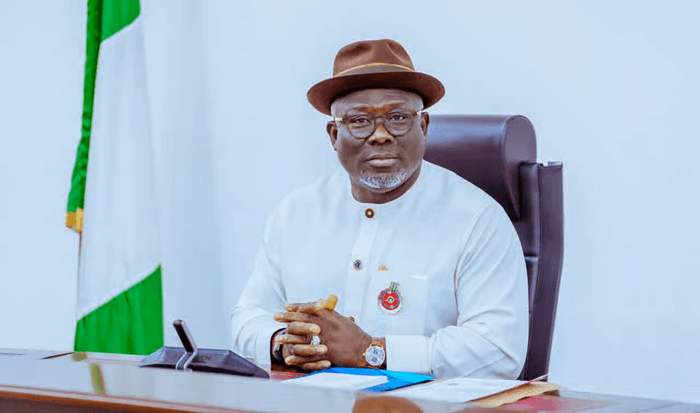
A chieftain of the All Progressives Congress (APC) in Ondo State, Steve Otaloro, has criticised the National Summit of opposition political parties held in Ibadan, Oyo State, describing it as
A chieftain of the All Progressives Congress (APC) in Ondo State, Steve Otaloro, has criticised the National Summit of opposition political parties held in Ibadan, Oyo State, describing it as a gathering of “recycled elites” lacking direction and credibility.
The summit, convened by Seyi Makinde, announced plans to present a single presidential candidate for the 2027 general election to challenge Bola Ahmed Tinubu and the ruling APC.
Prominent opposition figures at the meeting included former Vice President Atiku Abubakar, Labour Party’s presidential candidate Peter Obi, New Nigeria Peoples Party (NNPP) leader Rabiu Kwankwaso, former Rivers State governor Rotimi Amaechi, former Senate President David Mark, and former Osun State governor Rauf Aregbesola, among others.
Reacting in a statement issued on Sunday in Akure, Otaloro said the “Opposition Leadership Summit” failed to present a clear ideological direction or policy alternatives capable of challenging the current administration.
He described the meeting as “a carefully staged convergence of disparate political actors united not by vision, but by a desperate quest to regain access to power.”
Otaloro further dismissed the event as “more of a political tea party than a summit of ideas,” arguing that many of the participants had previously held positions of authority during periods he characterised by economic stagnation and weak governance.
"In reality, it is nothing more than a carefully staged gathering of disparate political actors-united not by ideology, vision, or coherent policy direction, but by a singular, desperate objective: to regain access to power.
"What unfolded in Ibadan was less a summit of ideas and more a political tea party of familiar faces, many of whom previously occupied positions of authority in Nigeria and, by most measurable indices, presided over periods of economic stagnation, governance failures, institutional decay, and missed national opportunities.
"The roll call of participants alone tells the story: recycled elites whose governance records are already etched into Nigeria’s political memory. To suggest that such a coalition represents a credible alternative is to ignore both history and present reality," he said.
Otaloro argued that the coalition lacks grassroots support and the structural capacity to compete meaningfully at the national level against President Tinubu of the APC.
He stressed that what was on display in Ibadan was 'elite networking, not a mass political movement,' adding that there is no evidence of a coordinated national strategy but a summit of "an exercise in optics aimed at creating the illusion of momentum."
"There is no defined ideological blueprint, no structured policy alternative, and no evidence of grassroots electoral machinery capable of mounting a serious challenge to the incumbent administration. Instead, what is on display is optics-an attempt to manufacture the illusion of momentum where none exists.
"Across Nigeria’s federation, the reality on the ground remains unchanged: these political formations lack deep-rooted structures, organic support systems, or credible mobilisation capacity capable of competing meaningfully at scale. What exists is elite networking, not mass political movement; negotiation tables, not ideological conviction.
"More fundamentally, Nigerians are not without memory. The same political actors now repositioning themselves as an opposition front are, in many cases, the architects or beneficiaries of past governance systems widely associated with inefficiency, corruption allegations, weak institutional reforms, and economic mismanagement. Rebranding without accountability does not equal renewal," Otaloro said.
The APC chieftain maintained that the country requires forward-looking leadership anchored on performance and measurable development, rather than a rearrangement of old political blocs.
"More fundamentally, Nigerians are not without memory. The same political actors now repositioning themselves as an “opposition front” are, in many cases, the architects or beneficiaries of past governance systems widely associated with inefficiency, corruption allegations, weak institutional reforms, and economic mismanagement. Rebranding without accountability does not equal renewal.
Read Also: Nigeria, Uganda deepen TVET collaboration as NABTEB calls for stronger African partnerships
"Nigeria does not need the rearrangement of familiar political fragments. It requires a decisive break from recycled leadership cycles and a forward-looking governance culture anchored in performance, discipline, and measurable development outcomes," he added.
Otaloro, however, expressed confidence in the reforms being implemented by President Tinubu, explaining that they are geared towards long-term economic stability and national growth.
While acknowledging the challenges associated with the reforms, the APC stalwart warned that disrupting them ahead of the 2027 elections could reverse early gains.
"It is within this context that continuity becomes a central question beyond 2027. Disrupting ongoing reforms midstream risks reversing early gains and returning the nation to policy inconsistency.
"Sustaining and refining current economic and infrastructural trajectories offers a more coherent pathway for national development than reintroducing recycled governance models lacking ideological clarity," Otaloro added.