Subscribe

Stay informed

Get the day's top headlines delivered to your inbox every morning.

By subscribing, you agree to our Privacy Policy

The Daily Chronicle

Truth in Every Story

twitterfacebookinstagramyoutube

News

  • Politics
  • Business
  • Technology
  • World

Features

  • Opinion
  • Culture
  • Sports
  • Video

Company

  • About Us
  • Contact
  • Careers
  • Advertise

Legal

  • Privacy Policy
  • Terms of Service
  • Cookie Policy
  • Accessibility

© 2026 The Daily Chronicle. All rights reserved.

SitemapRSS Feed
Editorial

Ill-timed

Plans by the Independent National Electoral Commission (INEC) to revalidate voters ahead of the 2027 general election ran into a storm, and was thereby shelved. The electoral body had announced

Ill-timed
Share this article
Author 18290
April 13, 2026·7 min read
  • INEC’s proposal to revalidate voters good, but not urgent

Plans by the Independent National Electoral Commission (INEC) to revalidate voters ahead of the 2027 general election ran into a storm, and was thereby shelved. The electoral body had announced intention to roll out a nationwide exercise by which voters would revalidate their permanent voter cards (PVCs), the objective being to clean up the voter register and strengthen its integrity.

The commission said the voter revalidation, scheduled to start April 13, was aimed at removing ineligible entries in the voter register towards enhancing the integrity of Nigeria’s electoral process.

In a public notice issued via its official X handle recently, INEC explained that the exercise would target removal of “null and ineligible voters such as deceased, non-Nigerians, underage and multiple registrations” in line with legal provisions. The commission made clear that the exercise would not be fresh voter registration, but was specifically meant for voters who had registered to revalidate their existing records. “The exercise is part of the commission’s efforts to revise, update, clean and strengthen the integrity, accuracy, inclusivity and credibility of the national register of voters ahead of future elections,” the notice stated.

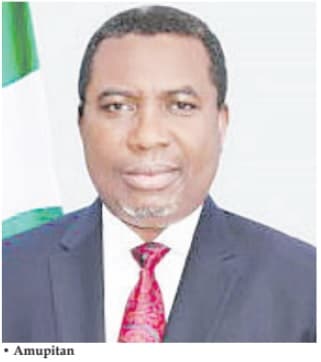
INEC Chairman Professor Joash Amupitan had, in February, broached the intention of the commission. At separate consultative meetings with civil society leaders and media executives in Abuja, he said voter revalidation had become necessary to address challenges associated with the national voter register – among them duplicate registrations, underage registrations, registration by non-citizens, presence of records of dead persons on the register as well as incomplete or inaccurate voter records, which collectively undermine public confidence in the electoral process.

According to the INEC boss, although the national register of voters was first compiled ahead of the 2011 general election and has been continually updated and deployed for successive general, off-cycle and by-elections, its credibility must be periodically reinforced to reflect current realities and meet public expectations.

Advertisement

300x250

“As of the 2023 general election, the register stood at 93,469,008 voters. However, these anomalies continue to generate legitimate concerns. A credible register remains the bedrock of free, fair and transparent elections. No electoral process can command public confidence without trust in the integrity of its voter register,” he said, adding that the proposed revalidation would sanitise the register ahead of 2027.

As regards continuous voter registration (CVR) that is simultaneously ongoing, Amupitan said the commission registered 2,782,589 eligible voters during the first phase conducted between August and December 2025. He added that the second phase, which commenced January 5, this year, would run till April 17, with the entire exercise concluding on August 30.

In an April 2 memorandum addressed to Resident Electoral Commissioners (RECs), Secretary to the Commission Rose Oriaran-Anthony detailed the procedure of the proposed voter revalidation. According to her, the revalidation would be by a hybrid mode allowing registrants to participate online or at designated physical centres. The physical centres, according to the plan, would be established at council areas, registration areas and at polling units across the country.

Read Also: Tinubu redesigning northern economy with Kano as hub — Yilwatda

To facilitate the process, the commission planned to deploy INEC Voter Enrollment Devices (IVEDs), with two IVEDs stationed at each council centre and one device at each registration area centre and polling unit. The exercise would be manned by a combination of INEC staff and members of the National Youth Service Corps (NYSC), with two personnel posted to each enrollment device.

The memo outlined timelines for the exercise as commencing with voter education and publicity on March 1. The first phase of physical revalidation at the council area level was slated for April 13 till May 2. The fieldwork was to move to registration areas from May 5 to May 11, and to polling units from May 13 to May 19.

Among others, the action plan set dates for display of the voter register at different levels, with the presentation of the final register fixed for December 15. The presidential and National Assembly elections are slated for January 16, 2027, with the governorship and state assembly polls holding February 6.

In a statement at the weekend, INEC announced that it would hold off the voter revalidation exercise till after the 2027 elections. National Commissioner and Chairman, Voter Education Committee, Mohammed Kudu Haruna, said the rethink followed extensive deliberations at a meeting held with RECs on Friday. “Following deliberations, the commission resolved to postpone the exercise until after the 2027 general election,” Haruna’s statement said inter alia.

Advertisement

300x250

In a fresh memo a day earlier, Oriaran-Anthony had mandated the RECs to suspend publicity and other arrangements towards the proposed voter revalidation and await further directives.

INEC’s initial plan for voter revalidation had elicited fierce objections from a range of political stakeholders, most notably opposition actors who typically impute ill-motives to programmes and actions of the commission even when there is no justifiable basis.

We argue, though, that there is inherent merit in the proposal. One of the biggest dents on Nigeria’s electoral system is low voter turnout, and this is partly a function of the size of the voter register.

From a population of about 58 million in 1999, the country’s voter register ballooned to 93.5million registrants before the 2023 general election, but voter turnout has progressively dwindled at elections. Official data showed percentage turnout for presidential polls as 52.3 percent in 1999, 69 percent in 2003, 57.5 percent in 2007, 53.7 percent in 2011, 43.7 percent in 2015, 34.8 percent in 2019 and 26.72 percent in 2023. This is partly attributable to ineligible entries subsisting on the voter roll, among them records of dead persons and others that shouldn’t have gotten onto the register in the first place.

Voter revalidation would be an opportunity to weed out ineligible entries and retain records of voters from which turnout can be realistically expected on election day. Besides, INEC has full power under the law to compile and maintain the voter register, contrary to argument being plied by some objectors that it lacks such power.

Advertisement

300x250

Having said that, we also argue that the proposal was ill-timed, coming less than nine months to the 2027 general election. For one, INEC’s plate is overcrowded already, considering activities outlined in the build-up to the poll, including the CVR that is not concluding until the end of August. The commission was presuming too much on the resilience of its system by taking on another exercise like voter revalidation with logistics nearly as cumbersome as election day-related logistics.

Besides, the electoral body failed to build a consensus among political actors over the exercise. Coming so close to the general election, voter revalidation took on a hue that was more political than operational, hence needed the buy-in of political players to sail smoothly.

INEC had neither the time nor showed the sensitivity for securing such buy-in, and so it wasn’t well placed for the exercise.

Even pertaining to the electorate, it wasn’t the best of time. In less than nine months from now, they are expected to turn out to vote and need not be burdened with pre-election processes that are as exhausting as the election day obligation. Worse is that reluctance by eligible voters to submit to revalidation under the present circumstance could have ended up disenfranchising many on election day.

It might be argued that voter revalidation at this time could have indirectly sensitised the voters towards their election day commitment. But that would be ignoring the factor of trust deficit in the electoral process being a major demotivator of voter turnout.

What INEC needs is to work on enhancing public trust in the process, not further alienate voters before election day. It is wise that the exercise has been deferred till after the 2027 polls when extensive groundwork can be done in mobilising the electorate as well as political stakeholders.

Tags:Ill-timedInec
Share this article
Author 18290

Advertisement

300x250

Related Articles

Police, Navy join forces against drug-induced crimes, strengthen intelligence

Police, Navy join forces against drug-induced crimes, strengthen intelligence

The Nigeria Police Force and the Nigerian Navy have strengthened collaboration to combat drug-related crimes, arms smuggling and other internal security threats following a strategic visit by the Assistant Inspector-General

27 minutes ago
FG disburses N11.4bn to 183,186 households in Kwara

FG disburses N11.4bn to 183,186 households in Kwara

The Federal Government said it has disbursed over N11.4b to vulnerable households in Kwara State under its HoPE-CT programme. The Minister of Humanitarian Affairs and Poverty Reduction, Dr. Bernard Doro,

30 minutes ago
Eno awards scholarships, jobs, houses to indigents to mark 62nd birthday 

Eno awards scholarships, jobs, houses to indigents to mark 62nd birthday 

Akwa Ibom state governor Umo Eno has awarded scholarships, jobs and houses to less privileged persons on orphanages and charity homes to mark his 62nd birthday. Speaking at a special

36 minutes ago
Why I’d rather be a pet mum than have kids - Phyna  

Why I’d rather be a pet mum than have kids - Phyna  

Reality TV star Phyna has said she has no desire to have biological children, stating a preference for raising pets instead. The former Big Brother Naija winner disclosed this in

43 minutes ago

Advertisement

300x250