‘Nigeria can’t achieve $1trillion economy without industrialisation’
The new National Industrial Policy (NIP) aims at turning Nigeria into a manufacturing hub with manufacturing sector contributing 30 per cent to the nation’s Gross Domestic Product (GDP) by 2030.
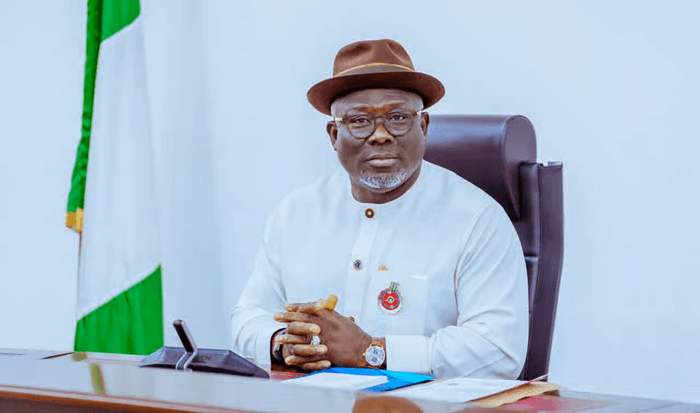
The new National Industrial Policy (NIP) aims at turning Nigeria into a manufacturing hub with manufacturing sector contributing 30 per cent to the nation’s Gross Domestic Product (GDP) by 2030. Minister of State for Industry, Trade and Investment, Senator John Enoh, who fielded questions from select journalists in Lagos, ahead of the official unveiling in Abuja tomorrow, shares insights on the federal government’s plan to revitalise the economy. Ibrahim Yusuf was there. Excerpts:
First, when you talk about previous industrial policies, I mean, the difference is that this particular policy is big on implementation and it’s big on execution. I mean, this policy starts with an appreciation of what the problem is and sets out to provide, you know, solutions to these problems. I mean, this policy was crafted with the recognition that policy has never been a problem to our country. What has continued to be a problem has been, after the policy, what next?
So this policy understands that it’s not policy for the sake of policy. It’s a policy for what we can achieve for the country. And therefore, so much effort has been spent, you know, trying to fashion out an implementation framework that can get this policy to work.
Which is why, even far ahead of the formal launch of this policy, we’ve spent a lot of time, we have a lot of sessions, trying to make sure that we get the implementation right. Because we want to celebrate only after what impact this policy is able to achieve for the country industrially, not just because we have a policy document. I mean, it’s clear in terms of timelines, in terms of responsible people, who are those responsible for what, in terms of alignment with the sub-nationals.
I mean, at the time we were doing validation of the policy, when it was still in grant form, we had representations from the Nigerian Governors Forum, from associations of local government, and other stakeholders because ultimately, this policy is for the country. It’s not just for the ministry alone.
When I was posted as Minister of State for Industry, I mean, I was shocked when, in a session with the Manufacturing Association of Nigeria, they had never been consulted in any of the policies that had come out in terms of industry. So this policy has the ministry and various stakeholders, including the organised private sector, you know, taking part and getting it to where it is, development partners, everybody has had a buy-in to this policy. You know, so there is this strong hope that, and optimism, that this policy will deliver and truly be different.
You said that certain programmes, certain challenges are being identified as part of the effort to frame this policy. Did you also identify the problem of power? And if you have done that, what level of engagement is ongoing with the Power Minister?
Okay, now what I can say for free is that very early, we have recognised the fact that the big elephant in the room was power. It was power. And power is one of the five thematic areas that the Industrial Revolution workgroup that I chair and co-chaired by the President of MAN, identified.
And after that identification, one of the things we have decided is that in going forward, we’re going to inaugurate ministerial roundtables. And that the first and only ministerial roundtable that we’ve had to hold has had to do with the roundtable dealing with power, right? Power, security, and infrastructure.
And, you know, as the roundtables are intended to be modelled, each of these roundtables brings together people who have solutions to that particular constraint in the room. And hope that by the time we get to that roundtable, at least we’ve started solving that problem. You know, so when we organised the roundtable on energy, we had the Power Minister in the room.
We had the Nigeria Electricity Regulatory Commission in the room. We had the Nigerian Midstream and Downstream Petroleum Regulatory Authority (NMDPRA) in the room. We had all of these players. We had people playing in the gas ecosystem in the room. And there was identification and realisation and conclusion that to solve the power challenge, we need to talk about blended power. You know, we need to talk about a mixed combination between grid power, power from gas and then from renewables and all of that. And that all of this is going to get together to get us to make sense and to make progress in dealing with the power challenge.
Still talking about manufacturing, you have identified the fact that come 2030, you hope to generate 30 per cent GDP through the manufacturing sector. That comes across as ambitious. How do you think we can achieve that?
Well, when you set a goal, you don’t set a goal that is easy to achieve. You know, the goal setting is aspirational. I mean, at the moment, you know, manufacturing and industry contribution to our GDP is in single digits. And what we hope is that through a concerted and serious implementation of Nigerian industrial policy, we’ll be able to achieve a double digit growth by 2030. So I think that Nigeria has got everything in place to achieve this. And I’ll give you some examples. You know, at the moment, we are too concerned with the exports of our primary raw goods and raw materials. You know, we have a bill in the National Assembly, which is almost getting concluded, that talks about 30% value addition. At the moment, our trading relations with other countries is still in the positive, even when our main source of export is still primary goods.
Read Also: Queen Idia takes centre stage for Nigeria–Canada cultural exchange
Do you know how much that will matter by the time that we’re able to actually implement a 30 per cent value addition? That is going to be monumental. And I think that we’re a big country, we have a big economy.
And I think that what is going to be the missing link is the extent to which we’re able to, you know, concertedly and conscientiously implement the Nigerian industrial policy, which in itself is a guideline in terms of value addition, in terms of various value chains and all of that, in terms of solving all these problems. You know, so Nigeria’s aspiration is to be an industrial nation.
The President talks about a $1 trillion economy. Nigeria cannot be an industrial nation if we don’t find or have manufacturing contribution by GDP getting to double digits.
You talk about the bill that is currently at the National Assembly, which seeks to prevent the export of commodities in raw form. But there are also concerns that the conditions for scaling up our processing, scaling up our value additions are not there yet. Don’t you also think the bill is premature?
Well, I think that if at this point in 2026, Nigeria still considers a bill of such a nature immature, then we’re not a serious country. We’ve been exporting primary products from pre-independence to the independence era, and I think that that is why we are where we are. Some other opinion is that 30% is even too low for a country like Nigeria.
In countries and climates that have achieved industrialisation, they haven’t waited for every condition to be right. Industrialisation will come with tough conditions. Industrialisation will not come easy.
But industrialisation will come in spite of those odds and those constraints because we know what the gains of industrialisation will be and are. We’ll continue to push it. We’ll be solving the challenge of industrialisation and solving the problem that we are talking about.
That is the only way we can achieve industrialisation. I think, for example, that the conditions, the availability of raw material is there. I’ll give you a little example. Just a little decision that was taken to ban sheanut export, a temporary ban for six months, if you see how much has been achieved in terms of processing in our country, then you know that 30% value addition is not even enough. There are a lot of people who are willing to invest in processing. But they are just waiting to make sure that there is consistency in government policy decisions before they can bring it forward.https://ngxgroup.com/exchange/data/equities-price-list/