What next after Kefas’ defection?
Taraba State became a stronghold of the All Progressives Congress (APC), following Governor Agbu Kefas’ defection. Correspondent VICTOR GAI examines the implictions of the allegiance shift for future contests in the
Taraba State became a stronghold of the All Progressives Congress (APC), following Governor Agbu Kefas' defection. Correspondent VICTOR GAI examines the implictions of the allegiance shift for future contests in the Northeast state.
What began as a mere rumour crystallised on Saturday, January 31, 2026, with the presentation of the APC flag to Governor Agbu Kefas by the party’s National Chairman, Professor Nentawe Yilwatda.
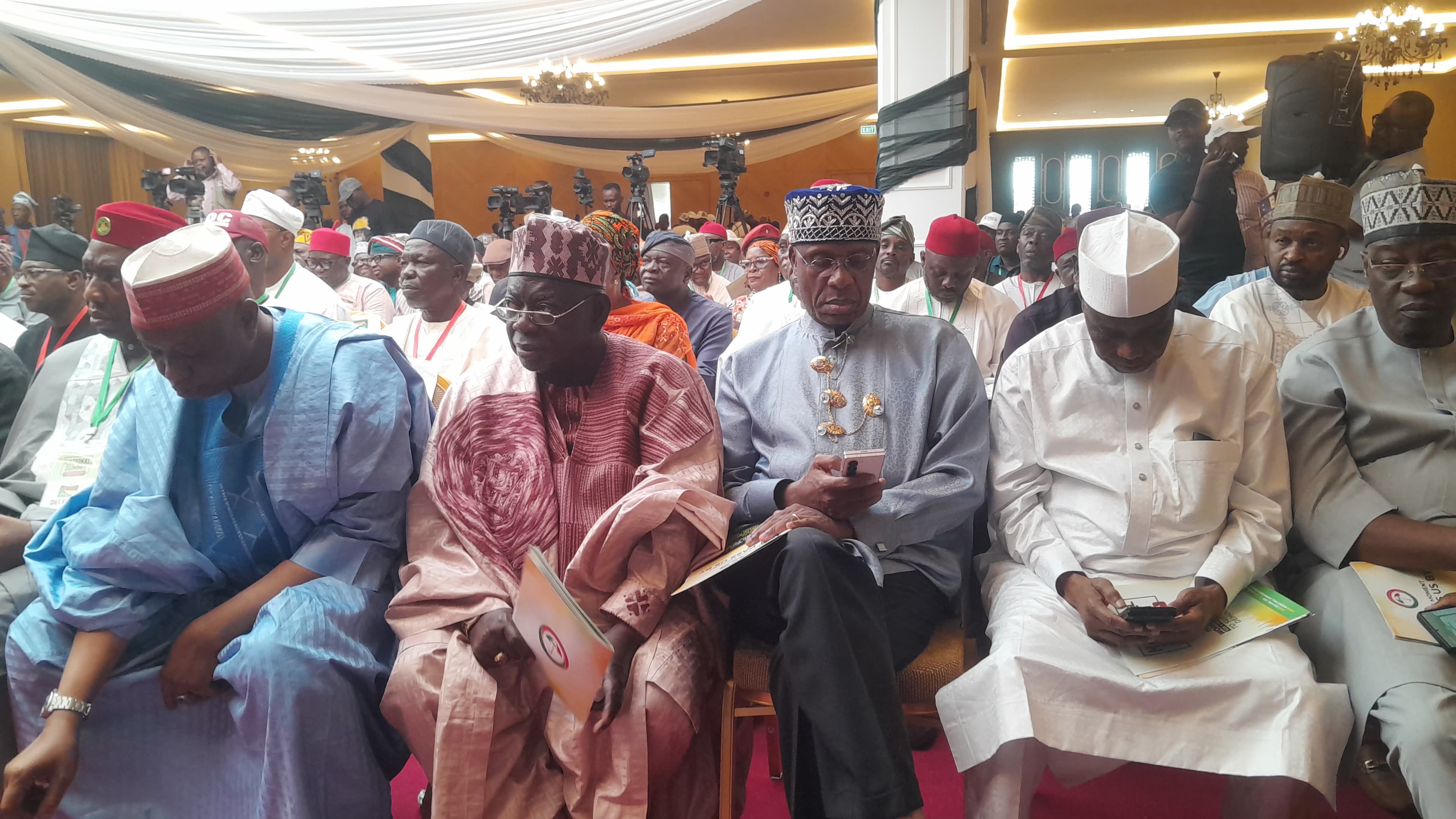
The colourful ceremony held at the Jolly Nyame Stadium in Jalingo and witnessed by Vice President Kashim Shettima and no fewer than six governors marked a historic moment. Jalingo was agog as the People’s Democratic Party’s (PDP) last northern stronghold fell to the ruling APC.
The journey had begun months earlier, when Governor Kefas was introduced to President Bola Ahmed Tinubu at the Aso Rock Villa as one of the new brides of the party.
The arrangements for his formal reception into the APC were completed in November, before the kidnapping in Kebbi State prompted the governor to postpone the event in solidarity with the Kebbi State Government.
In December, Kefas officially registered as an APC member ahead of his public unveiling. His party membership card, however, was presented to him during a brief ceremony at the TY Danjuma House in Jalingo by the State APC Chairman, alongside party officials from the Wukari Local Government Area, where the governor hails from.
In his acceptance speech, Kefas explained the reasons for postponing his formal defection ceremony. “As you are already aware, a decision has been made. I have written a letter to the concerned leadership of the party. All programmes had been set for our movement to the APC on November 19,” he said.
“But in solidarity with national issues, especially the abduction of schoolchildren in Kebbi and other places, we decided to suspend it.”
READ ALSO: Africa needs own credit rating agency
He added that registration with the party was necessary to give him a new political identity and allow him to participate fully in party affairs, while assuring that a new date for the official ceremony would be announced.
Kefas’ dilemma:
Advertisement
300x250
Not a few Tarabans have expressed disappointment over Kefas’ defection to the APC, describing the move as self-serving rather than people-oriented. However, viewed from a political perspective—particularly given the crisis within the PDP—many argue that the governor’s decision is understandable.
On the D-day, Saturday, January 31, 2026, Kefas assured the people of Taraba that he would not abandon them but would continue to engage with them meaningfully.
He said he defected to align Taraba with the centre and assure the state’s future. “It is not for me; it is for you. We cannot allow isolation. Taraba must align with the centre. I am not here for survival; I am here for service. I will not abandon your mandate. I will continue to engage you,” he pledged.
Vice President Kashim Shettima, reiterating the need for alignment with the centre, said “governance is not an act of isolation but of partnership,” adding that progress is continuous.
Senate President Godswill Akpabio, represented by Deputy Senate President Barau Jibrin, said Taraba now had the advantage of accelerated development.
APC National Chairman, Professor Nentawe Yilwatda, described Kefas’ defection as “shifting cultivation” and assured the governor of the benefits of joining the progressive family. He also advised PDP members to take advantage of the opportunity to align with the ruling party.
The thrust of the speeches centred on alignment with the centre, which many believe underpins economic benefits in Nigeria’s democratic setting. It is widely assumed that states controlled by the ruling party enjoy political patronage, including project siting, completion of abandoned projects, and other federal interventions.
The Taraba APC Chairman, Ibrahim El-Sudi, summed it up by stating that “APC has conquered PDP not through the barrel of the gun, but through the progressive policies of President Bola Ahmed Tinubu.”
Long and torturous journey:
Since the return to democracy in 1999, Taraba State has remained under PDP control, proud to be the only PDP state in the North that has never fallen to the opposition.
The state enjoyed relative political stability until 2015, when the PDP lost power at the centre. Thereafter, Taraba endured insecurity, poor infrastructure, and low revenue, despite its enormous economic potential.
The move to the APC, therefore, marks a major shift in the state’s socio-political equation and may affect its economic fortunes.
Advertisement
300x250
Tarabans are sentimentally attached to the PDP, a key reason the state remained in the party while others defected. Even neighbouring Adamawa and Gombe oscillated between the PDP and the APC, but Taraba stood firm—until now.
The state’s politics is heavily influenced by ethnic and religious considerations, godfatherism, and a winner-takes-all mentality. Over time, however, observers watched as the PDP gradually lost its grip.
In the 2023 governorship election, PDP’s Agbu Kefas scored 302,614 votes, while the combined votes of APC and NNPP stood at 344,779. The PDP victory was largely aided by divisions within the APC.
Politically, PDP dominance had waned. The party controlled two of three Senate seats, while both PDP and APC each controlled three House of Representatives seats. In the State Assembly, PDP held a slim majority of 13 seats against the opposition’s 11.
The APC’s victory in the Karim I State Constituency by-election further signalled a resurgent opposition.
Political, economic implications:
Critics argue that Kefas’ move is driven by poor performance and a desire to survive politically. Supporters believe alignment with the APC-led Federal Government could unlock development.
Federal roads such as Jalingo–Numan, Jalingo–Yola, and Jalingo–Wukari have remained in deplorable condition for decades, posing risks to travellers.
Advertisement
300x250
According to APC spokesman Artimas, the governor’s decision is pragmatic.
“If the governor feels that development can be better achieved by aligning with the APC at the national level, so be it. We want development,” he said.
Public reaction remains mixed, compounded by the silence of the state’s political godfather, General TY Danjuma, whose influence has shaped Taraba politics for decades.
Already, there is quiet realignment towards the African Democratic Congress (ADC), driven by disaffected APC members and PDP loyalists unwilling to follow Kefas.
The Concerned Taraba Youth Group believes the defection will attract federal projects, including the Ibi Bridge, Namnai Bridge, major road networks, and the Mambilla Hydropower Project. “This is not about party rivalry; it is about practical politics that brings real dividends of democracy,” said Comrade Shedrack Gani.
The godfather factor:
Ultimately, the TY Danjuma factor may be decisive in 2027. His absence from Kefas’ defection ceremony has fuelled speculation of a fallout. If Danjuma backs a rival candidate—particularly from the southern zone—it could trigger resistance from the northern zone, which may insist on completing its tenure.
With Kefas’ defection, the rise of the African Democratic Congress (ADC), shifting alliances, and the godfather factor, Taraba appears set for a political awakening. Time will determine the direction the state takes in 2027.